
Lady Chief Justice and Bar of Northern Ireland to host new series on perspectives on the Rule of Law

The Office of the Lady Chief Justice and the Bar of Northern Ireland have launched a new initiative on the rule of law in Northern Ireland

The series will explore how the rule of law can be engaged in real world issues including economic growth and stability, immigration, identity, rights, the legacy of our past, and free speech.

Launching the new initiative, the first event in the series, 'Understanding the Rule of Law - What does it mean for our society and economy?' will explore how the rule of law underpins equality, fairness, and accountability in public life, examining its impact on economic development and social cohesion in Northern Ireland.

The event will be opened by the Lady Chief Justice and feature a panel discussion including:

  • Donal Lunny KC, Chair of the Bar of Northern Ireland;

  • Fiona Doherty KC, Bar of Northern Ireland;

  • David Sterling KCB, former Head of the NI Civil Service;

  • Sinead Marmion, Senior Associate at Phoenix Law with expertise in dealing with asylum and immigration cases;

  • Tracy Stuart, Head of Legal, Invest NI

  • Geraldine McGahey OBE, Chief Commissioner of the Equality Commission for Northern Ireland.

Speaking ahead of the event, The Lady Chief Justice of Northern Ireland, Dame Siobhan Keegan said:

“I am delighted to launch this series in partnership with the Bar of Northern Ireland. The Rule of Law is critically important to everyone in society, whether ensuring that fundamental rights and freedoms are upheld, preventing the abuse of power or providing a stable framework for a functioning democracy and economy.

“It is therefore equally important to promote a better understanding of what the rule of law is, and I hope that this series will go some way to doing that.”

Donal Lunny KC, Chair of the Bar Society of Northern Ireland, added:

“The rule of law means that no individual is above the law and that no individual is beneath its protection. It is a fundamental principle that shapes our lives, and where the rule of law is strong, communities thrive, the economy is stronger and social cohesion is enhanced.  

“None of us should take the rule of law for granted. Indeed, we should be ever vigilant as to the threats to the rule of law, particularly in a climate in which lawyers are attacked for defending, and the judiciary are criticised for upholding, individuals' rights. 

“That’s why this new initiative, the “Rule of Law in Perspective”, is so fundamentally important. The aim of the initiative is to engage our citizens on the importance of the rule of law for all of us – platforming informed discussion and consideration amongst civic society, young people and those involved in the legal and justice sector.”

The event will take place on Wednesday, 12 November at 4pm in the Inn of Court at the Royal Courts of Justice in Belfast.

Numbers are limited and those wishing to go should RSVP to events@barlibrary.com to secure a place. 

Reimagining Leadership Through Partnership and Purpose

By Christina Bates, Head of Finance, Allstate Northern Ireland

Leadership is changing, and we must too evolve the ways we nurture it.

In Northern Ireland, where collaboration and dialogue remain the cornerstones of progress, the Centre for Democracy and Peace Fellowship Programme shines as a model for how business, politics, and civic society can come together to shape a better future.

As a Trustee of the CDP and a member of the Fellowship’s Advisory Board, I see firsthand the great returns of investing in leaders who unite empathy with evidence and ambition with purpose. The Programme is more than a leadership course, it’s a movement that challenges assumptions, creates dialogue, and equips Fellows to lead through complexity.

Bringing together emerging and established leaders, the Fellowship champions inclusive, values-based leadership that evolves alongside the society it serves.

At Allstate, we believe business has a vital role to play in building a more inclusive and resilient society. Supporting the Fellowship reflects our values of integrity, innovation, and community impact.

This is partnership, not simply philanthropy. We host sessions, share expertise, and engage directly with Fellows, strengthening both the programme and Allstate’s leadership culture. By investing in future leaders, we are also investing in the long-term social and economic health of Northern Ireland.

Since its launch in 2021, the Fellowship has supported nearly 100 leaders from across politics, business, and civil society. Many have gone on to shape policy, drive organisational change, and lead initiatives that make a tangible difference, like improving transport accessibility..

The continued engagement of Alumni is key to the programme’s success. The networks built through the Fellowship endure long after the sessions end, supporting collaboration where it’s needed most: between business and politics, across sectors, and across communities.

This year’s cohort is the most diverse to date, representing five political parties and a wide range of industries. My hope is that they embrace the spirit of possibility that defines the Fellowship, challenging one another, building bridges, and learning to lead together.

When Allstate hosted the Governance, Finance and Policy Design session on 9 October, it reinforced a simple truth: sound governance and ethical decision-making are not ideals but essentials, the foundation of sustainable business success.

Today, companies are expected to deliver more than profit; they must deliver purpose. By supporting initiatives like the CDP Fellowship, business leaders can help build a culture of empathy, accountability, and collaboration.

At Allstate, we believe leadership is a shared endeavour, and that when business and society work together, Northern Ireland’s future can be defined not by division, but by possibility.

Spotlight on Skills

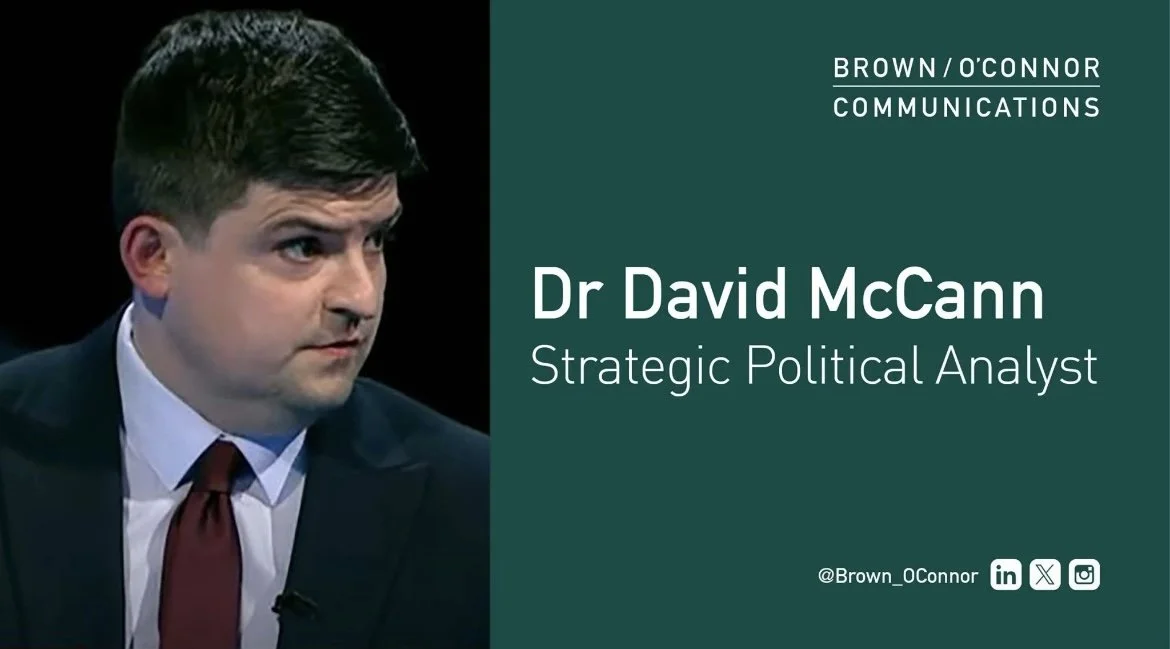
By David McCann, Strategic Political Analyst at Brown O’Connor Public Affairs

Since the Executive returned in February 2024, there has been a focus on skills issues within the Northern Ireland economy. This month, the Department for the Economy published its Skills Action Plan, which set out agreed actions that the department will focus on over the next three years.

The plan places heavy emphasis on collaboration with industry and educational institutions, as well as on enhancing existing education and training programmes in Northern Ireland.

Different sectors that engage with government departments have “consultation and strategy fatigue.” The consultation documents are produced, people within a particular sector take their time to respond, a strategy is developed, and when the rubber hits the road — years later — there is sometimes little to show for it.

The Public Accounts Committee produced a report in May 2025 outlining the challenges that remain regarding skills in Northern Ireland, highlighting that unless we change our approach, we are in danger of the same result. The report highlights that we need greater focus and pace to deliver on the goals of the skills strategy, and a stronger evidence base to evaluate whether the more than £400 million we are spending in this area is delivering value for money.

Banking Successes

Knowing what we have done well in the past is just as important as identifying mistakes. If we do not have a grasp of either, that will ensure that successes are not adequately appreciated and failures are not corrected.

A success worth highlighting is the establishment of the Skills Council in 2023, which has helped bring together the various sectors directly involved in delivering improved skills across Northern Ireland. In a place where we all too often work in silos, bodies such as this are critical for bringing together diverse voices who do not routinely engage with one another.

Learning from other places

A consideration for an Economy Minister, after 2027, is how a body such as this can be enhanced to take a more leading role in this area and mirror more closely the approach adopted in the Republic through the National Skills Council. Then we can further decentralise our skills approach away from Stormont towards more local decision-making. There is an urgent need to make the skills landscape easier to understand and more accessible to businesses.

This leads to another area where the Republic is doing much better than we are: investment in and support for further education. By further education, I do not simply mean investment in our universities. I mean, supporting the many strong further education colleges we have dotted across local communities in Northern Ireland. The Productivity Institute has highlighted the significant economic and civic value that these colleges have in bridging skills gaps in other parts of the UK. Supporting these institutions and giving them the freedom to provide tailored programmes that address skills shortages, you can achieve tangible improvements in economic outcomes.

In essence, further education colleges need to be at the centre of any skills eco system, not something on the sidelines.

For Northern Ireland, our skills shortages are holding back our economic development. Mixed with a silo mentality in parts of our government, a lack of accessibility, and a lack of focus, we are not capitalising on our strengths. Looking toward some of the best practices being identified in the Republic of Ireland and other parts of the UK, there is a credible pathway forward.

Part of this will need politicians to see new approaches and be prepared to let relevant institutions the freedom to get on with it. This approach works right on our doorstep; it will work here, too. Make it easy for businesses to engage, listen to their needs, and then provide the resources to our further and higher education so that graduates have the right skill set we so desperately need.

Mellon Properties Brings Modern Estate Agency to Omagh

Neil Mellon

Omagh native Neil Mellon has returned to his home town to launch Mellon Properties, a new estate agency blending local roots with big-city experience and a drive to do things differently.

Neil, a highly qualified Chartered Surveyor and RICS Registered Valuer, believes Mellon Properties reflects the future of estate agency in Northern Ireland: younger, digitally savvy, and based on trust, openness and transparency.

After a decade working in Belfast’s commercial property sector with Frazer Kidd, Neil is getting set to open an Omagh office in a building with deep family history – the very same premises that once housed his grandfather’s barbershop in the 1950s and 60s.

Neil’s father inherited the building on George’s Street nearly two decades ago. Earlier this year, when the family were considering the future of the premises, 31-year-old Neil decided the time was right to strike out on his own and base his new estate agency office in the historic shop space.

Mellon Properties aims to stand out from traditional estate agencies by offering a modern, approachable service, built on Neil’s experience both as an agent in Belfast and as a young homeowner himself.

Neil Mellon said:

“Omagh is attracting younger buyers, families and remote workers looking for affordability and a better quality of life outside of the budget constraints of the big cities.

“With my experience of both residential and commercial property, I want to support buyers and sellers to make this process as accessible and hassle-free as possible and I think young people are looking for a fresh approach.

Neil explained that he’s building an estate agency that aims to shake off unhelpful stereotypes and is fit for the needs of the next generation of home buyers, or those disillusioned from previous experiences.

“I believe that the thing that can make or break an estate agency experience is communication. Too often, buyers and sellers are left waiting weeks for updates. As a home-owner myself, I know how nerve-wracking, frustrating, and stressful this can be.

“If you’ve saved for years for a deposit, and put your heart and soul into choosing the home of your dreams, or if you’ve decided to downsize from the family home you raised all your kids in, you need someone by your side who understands what’s at stake.

“Buying or selling a home is one of the biggest and most personal transactions you’ll ever undertake – it needs treated with reverence and I believe good communication is the key. 

“People who choose Mellon Properties will see that we take a much more proactive and transparent approach. When people put their trust in us, they can expect us to treat their transaction as if it’s our own.”

As part of his community-first approach, Neil will also host First-Time Buyer Workshops, bringing together mortgage advisors, solicitors and property professionals to guide people through the buying process. The free sessions will explain each stage clearly, from securing finance to making an offer, while giving attendees the chance to ask questions in an informal setting.

Neil continued,

“At a time when digital and online tools matter more than ever, Mellon Properties will of course be digital-first, with a strong online presence, plenty of social media content, video and photos to help with the homework of searching for a new property.  However, our bricks and mortar premises are a sign of our commitment to building relationships – and trust – with the people of Omagh when we become their home-buying or -selling partner.

By restoring the office space and launching Mellon Properties, Neil is not only breathing new life into the town centre but also honouring a proud family legacy. He said,

“I’ve always wanted to run a business in Omagh, and opening in my family’s old building felt like the perfect way to reconnect with the town and bring new life to the high street. It felt like the right time to come home and bring my experience back to help others who are seeking their new home here too.”

While focused on Omagh, Neil will continue to advise on commercial property in Belfast, giving local clients access to his extensive network and experience in investment, sales, lettings and development opportunities.

More information about Mellon Properties can be found on their website: https://mellon.properties/ or you can reach out to Neil directly at neil@mellon.properties.


Justice in Transition: Northern Ireland's Justice Legislative Programme 2025-26

As the Northern Ireland Assembly edges closer to the end of its current mandate, the Executive has unveiled a streamlined justice legislative programme for 2025–26. Introduced by deputy First Minister Emma Little-Pengelly, the Executive has decided to bring forward two key Bills: The Sentencing Bill and the Victims and Witnesses of Crime Bill. While modest in number, these proposals alongside the Justice Bill, Race Equality Bill and Cara Hunter MLA’s Victims of Sexual Crimes Trauma Mitigation Private Members Bill, reflect targeted efforts to improve protections for vulnerable individuals and streamline legal processes in an already backlogged court system.

This legislative justice programme, as quoted by Stewart Dickson MLA, is “remarkably light on legislation”, but there is a plethora of changes to be expected within each bill which will undoubtedly impact the legal sector in Northern Ireland.

Sentencing Bill:

• To be introduced late 2025.

• This bill will incorporate Charlotte’s law into its statute, which will: implement stronger sentences for those who refuse to reveal the location of their victims’ bodies; potential incentives for those that cooperate with recovery of victims; and other possible incentives from the consultation process.

• The bill will also establish a statutory aggravator model for perpetrators of hate crime, ensuring motivating factors are reflected in sentencing.

Victims and Witnesses of Crime Bill:

• Currently in its pre-legislative phase, it follows a public consultation on the Draft Victims and Witnesses of Crime Strategy 2025–2030.

• This bill will prohibit the in-person cross-examination of victims of hate crimes to protect those who have come forward and tackle the re-traumatisation of victims within the justice system.

• The bill will also establish the post of Commissioner for Victims and Witnesses of Crime, who will be able to be a key support to victims and witnesses engaging with the justice system.

Outside of the legislative justice programme, there are other pieces of legislation making their way through the chamber that will undoubtedly reshape law and order in Northern Ireland if confirmed.

Victims of Sexual Crimes Trauma Mitigation Bill

• Currently in its Consultation Phase.

• This Private Member’s Bill tabled by Cara Hunter MLA proposes to create a more victim-centred system and will likely compliment the Victims and Witnesses of Crime Bill.

• This Bill proposes measures such as the grant of automatic access to Sexual Offences Legal Advisers (SOLAs); the choice to give Victim Statements online or in court, and free access to their cases’ sentencing remarks which could positively impact the number of victims actively and safely reporting.

Justice Bill

• Currently in its Committee Stage.

• This Bill impacts several areas within the legal system that will redevelop key areas of law and sentencing, whilst complementing other legislation as mentioned above.

• The bill aims to: amend retention periods for biometric material; make changes to bail and custody arrangements for children and young people; improve services for victims and witnesses; and improve the efficiency and effectiveness of aspects of the justice system.

Race Equality Bill

• Announced by the Executive Office and in its pre-legislative stage, the Bill comes at a critical time when Northern Ireland’s race hate crime figures are at their all time highest.

• This Bill seeks strengthen racial equality protections in Northern Ireland by addressing critical gaps in the Race Relations Order 1997, such as the absence of provisions for online harassment, and by ensuring the Executive fulfils its obligations under Article 2 of the Windsor Framework.

• This bill complements the goals of the Racial Equality Strategy 2015–2025, which was reviewed in 2024 and seeks to address gaps in racial equality legislation highlighted by the Equality Commission, such as the extension of protections and widening of racial scope.

As key legislative proposals work their way through or are on the brink of being announced, it is imperative for the legal sector to understand how these changes to the justice system will impact their work. As Northern Ireland moves towards stronger sentencing and a victim-centred system, the law and its personnel must be up to date and be aware of any changes to the legal sector.

The ‘Good Jobs’ Employment Bill: Key Details & Plans for 2026

The Executive’s legislative programme for 2025–26 was outlined in the Assembly this week by the Deputy First Minister, setting out a wide range of departmental priorities for the year ahead. One of the key announcements was confirmation that the ‘Good Jobs’ Employment Rights Bill will be brought forward by the Department for the Economy early in the new year.

The ‘Good Jobs’ Employment Bill Overview

The proposed Bill is designed to strengthen workers’ rights and modernise employment law in Northern Ireland. It focuses on addressing precarious working conditions and supporting fair treatment across the workforce.

Timeline

  • 13 October 2025: Executive legislative programme outlined in the Assembly.

  • January 2026: Economy Minister to introduce the ‘Good Jobs’ Employment Rights Bill.

  • Throughout 2026: Committee scrutiny and Assembly stages to follow.

Four Key Themes

The legislation will be structured around four key areas:

  • Terms of Employment

  • Pay and Benefits

  • Voice and Representation

  • Work-Life Balance

Issues the Bill Will Cover

Measures within the Bill are expected to include:

  • Allowing workers on zero-hours contracts to move to banded-hours contracts.

  • Tackling fire-and-rehire practices.

  • Ensuring tips are passed on in full to workers.

  • Establishing a right to disconnect from work-related demands.

  • Expanding trade union membership rights and strengthening collective bargaining.

  • Providing enhanced leave entitlements for carers.

  • Introducing neonatal pay and leave for parents of newborn children.

Next Steps

The Bill is expected to be introduced to the Assembly in January, with scrutiny to take place during 2026.

All Party Group on Access to Justice Examines Court Broadcasting for Northern Ireland

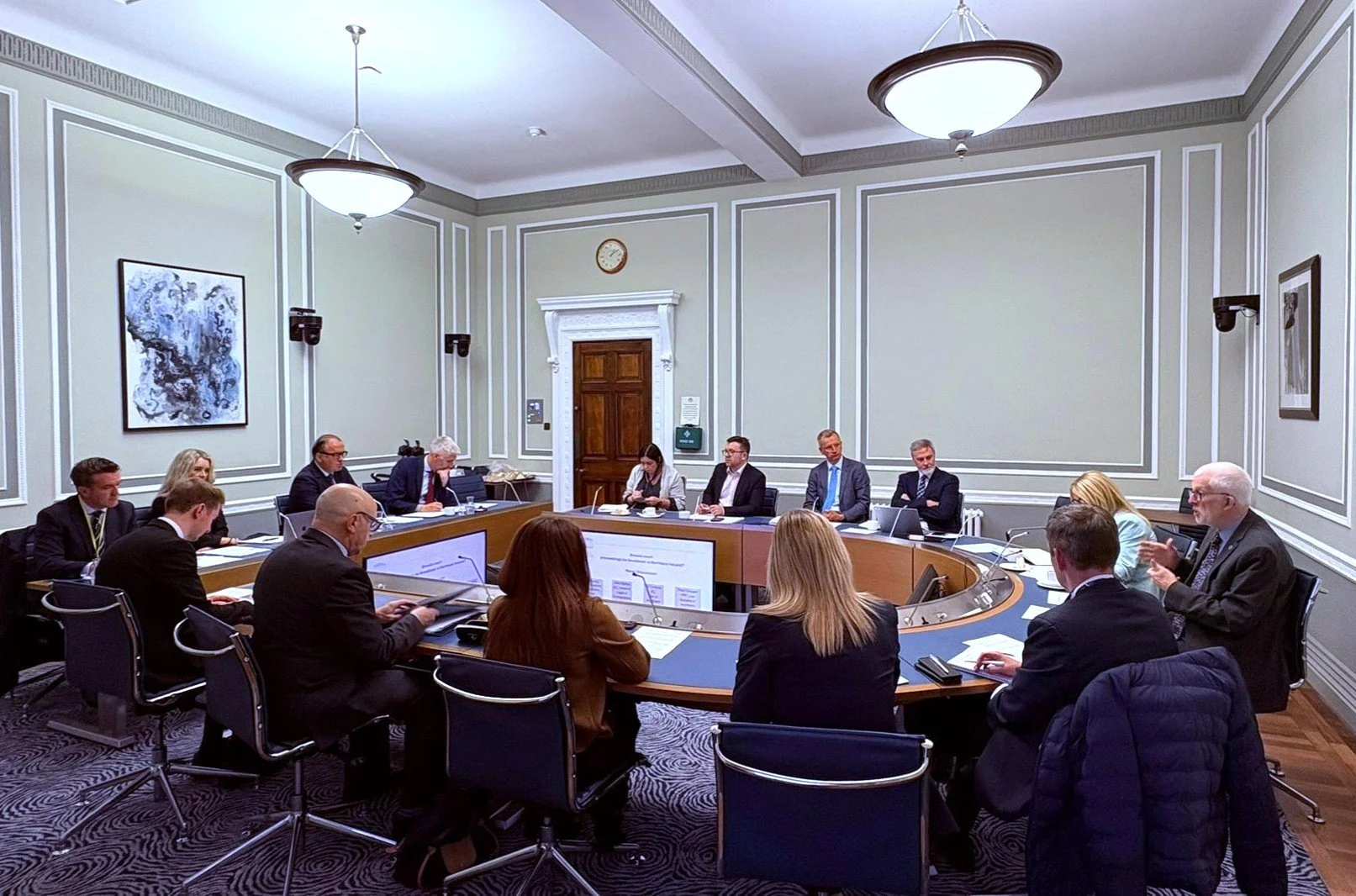
The All Party Group on Access to Justice has hosted a panel discussion at Parliament Buildings examining whether court proceedings should be broadcast in Northern Ireland, as it remains an outlier among its neighbouring jurisdictions in not allowing any recording or broadcasting of courts and tribunals.

The panel discussion, chaired by the All Party Group Chair Stewart Dickson MLA, brought together MLAs and leading figures from the legal and media sectors to examine proposals currently under consideration by the Department of Justice. The discussion explored key issues including balancing open justice with privacy concerns, learning from neighbouring jurisdictions such as England and Wales and Scotland, and the practical challenges of implementation.

The event featured expert contributions from David Young, Head of Ireland and Scotland Press Association; Jill Lindsay KC, Bar of Northern Ireland; Paul Dougan PPP, Law Society of Northern Ireland; and John Battle KC, Head of Legal and Compliance at ITN.

Stewart Dickson MLA, Chair of the All Party Group on Access to Justice, commented:

"The discussion held by the All Party Group highlighted the complex but important considerations around Northern Ireland potentially joining its neighbouring jurisdictions in allowing certain court proceedings to be recorded or broadcast. The expertise shared today, drawing on experiences from other jurisdictions, will be valuable as policymakers consider the way forward.

“The All Party Group's role is to facilitate these important discussions and ensure all viewpoints are heard as Northern Ireland examines its unique position.”

In a joint statement, representatives from the APG Secretariat, Bar of Northern Ireland and the Law Society of Northern Ireland, said:

"The legal profession recognises the importance of open justice and public confidence in our court system. The discussion demonstrated both the potential benefits and the legitimate concerns that must be addressed in any move toward court broadcasting. Any proposals must include robust safeguards to protect the integrity of proceedings, maintain judicial independence, and ensure the interests of all court users are protected.

“We are proud to both take part in and facilitate as secretariat these key discussions on issues that can fundamentally transform Northern Ireland’s justice system.”

With Northern Ireland currently prohibiting all court broadcasting, the All Party Group’s discussion marks a significant step in examining whether reform could enhance transparency and open justice while maintaining the integrity of the justice system

Northern Ireland Finally Has an Opposition - Let's Use It

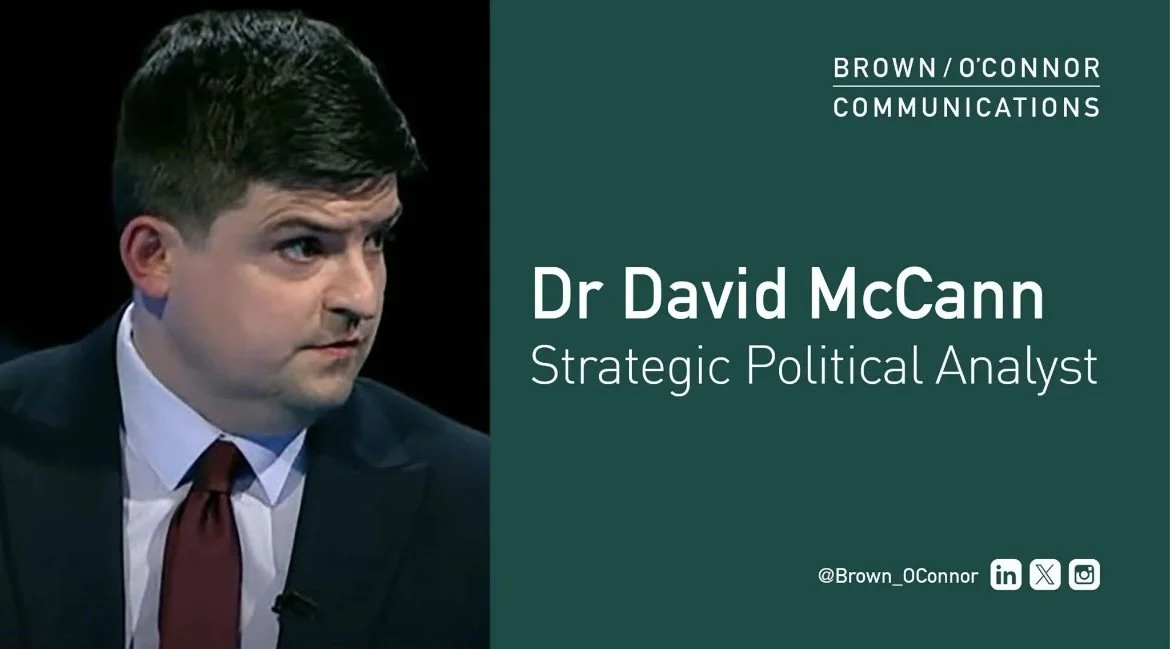
By David McCann, Strategic Political Analyst at Brown O’Connor Public Affairs

The SDLP are meeting for their annual conference next week in Belfast. The Official Opposition will mark one year with Claire Hanna MP as the leader of the party, and Matthew O’Toole MLA will be reflecting on 18 months since devolution was restored.

Electoral Challenges and the Road to 2027

The party has faced a tough electoral road since 2019, losing four seats at the 2022 Assembly Election and 20 seats at the 2023 Local Government Elections. Facing an electoral pincer movement from the Alliance Party and Sinn Féin, the party has a challenging road ahead to regain its electoral footing. The recent Lucid Talk polls indicate some optimism; the party is regaining ground, and its leader is personally popular. Notably, she polls well with Alliance and Green voters.

For 2027, the SDLP’s task will be holding some of the marginal assembly seats that it has, namely East Londonderry and Mid Ulster. Falling to six seats is a possibility for the party, and how they campaign from now until May 2027 will be critical for them to hold their current seats and make some gains in places like West Belfast. To revive their fortunes, they will need to win back some of the voters they recently lost to the Alliance Party and then engage in a longer game with Sinn Féin.

Opposition as a Permanent Feature

What is clear for now is that opposition is here to stay in Northern Ireland. It is unlikely that we will see a repeat of the 2020 format, in which all five parties entered the Executive simultaneously. The SDLP is getting more attention and traction outside than it ever did with only one minister.

Since opposition is present, people in Northern Ireland still view it as a new part of their political structures, and as such, they don’t really know how to engage with it properly. Yet having an opposition is a massive opportunity for everyone to get their ideas on the agenda and see some of them get a bit more traction.

Unlike governing parties, oppositions never have the support of the civil service or the same level of resources to generate and develop policy ideas. At Westminster or in Dublin, oppositions typically seek ideas from think tanks and other outside organisations to establish a programme for a future government. The opposition can bring motions in the assembly, and their representatives on committees raise important issues.

Engaging with Opposition Politics

As opposition evolves in Northern Ireland, it presents organisations here with a considerable opportunity to gain traction for policy proposals and move the needle on some public policy ideas. The Executive remains the primary decision-making body for what gets passed, but that does not mean the opposition does not have a meaningful role in helping ideas move forward.

The SDLP are still finding their feet in this role, trying out new approaches and ideas for what can hold the Executive to account and help the party renew. This is a significant opportunity for everyone to get proposals moving. Whilst an opposition can never put these ideas into reality, they can raise their profile.

The political challenges for the SDLP remain. Can they build momentum and become credible challengers to the Alliance Party in 2027? Outside of the politics, there are huge opportunities to shape and develop an opposition that is full of new and meaningful ideas.

Part of that job rests with people and organisations engaging with it. Northern Ireland finally has an opposition; let’s use it.

Community Pharmacies Top One Million “Living Well” Consultations

Health Minister Mike Nesbitt has marked One Million patient consultations delivered through community pharmacies and the Public Health Agency’s Living Well service.  Pictured are (L-R): Aidan Dawson, Chief Executive of the Public Health Agency, Community Pharmacist Emma Heaney, Medicare Pharmacy, Gerard Greene, Chief Executive, Community Pharmacy NI (CPNI), Health Minister Mike Nesbitt and Colin Deehan, Medicare Pharmacy Group

Community pharmacies across Northern Ireland have delivered a landmark one million consultations to patients through their “Living Well” public health service in the last three years.

As frontline health services are facing year-round pressures, the Northern Ireland Health Minister has stated his ambition to move the focus of healthcare more towards disease prevention and early intervention – known as a “shift left”.

The “Living Well” service provided by community pharmacies and supported by the Public Health Agency, is aimed at promoting key public health messages and advice to raise awareness and help address risk factors which contribute significantly to the overall prevalence of disease in Northern Ireland.

Community pharmacists and pharmacy teams support major public health initiatives by offering targeted campaigns under the Living Well service, with each campaign running for two months in pharmacies across Northern Ireland.

Campaigns include:

  • Cancer Awareness – spotting the signs; promotion of cancer screening

  • Mental Health – advice and signposting to services

  • Stay Well this Winter – preparing for winter with self-care (Flu, COVID and RSV vaccinations)

  • Sexual Health- (STIs, HPV, cervical screening and contraception)

  • Healthy Living -   live longer and stronger / staying active, know your alcohol units

  • Childhood health - MMR Vaccination

Northern Ireland Health Minister, Mike Nesbitt MLA said:

“Reaching one million Living Well consultations is a remarkable milestone for health and wellbeing in Northern Ireland. It highlights the vital role community pharmacies play at the heart of Health and Social Care – supporting people close to home, empowering people to make positive choices and easing pressure on other services.

“This neighbourhood approach is central to building healthier communities, and I want to thank our pharmacists and pharmacy teams for their dedication and commitment in supporting people every day.”

Gerard Greene, CEO of CPNI said:

“As a population, we can collectively do more to adopt a healthy lifestyle and look after our own health, particularly to tackle some of the biggest health issues: cancer, obesity, heart disease and mental ill-health.

“Through the highly trained and accessible health professionals in community pharmacies, there is a raft of support available to empower patients to make better choices to improve their own health and well-being, alongside many other important health interventions.

“Feedback from patients and pharmacists captured in Living Well evaluation reports continually demonstrates the vital role pharmacies play in preventive healthcare and tackling health inequalities.

“With such a well-established service, there is a real opportunity to build upon it further and really start to generate change within local neighbourhoods where community pharmacies are embedded.

“ I would like to thank community pharmacy teams across Northern Ireland in achieving this milestone and to recognise the role they play in making a positive and lasting impact on the health and well-being of their local communities.”

Northern Ireland Health Minister Mike Nesbitt has marked One Million patient consultations by community pharmacies across Northern Ireland under the Public Health Agency’s Living Well campaign.  He is pictured with Community Pharmacist at Medicare Cherryvalley in Belfast, Emma Heaney.

Aidan Dawson, CEO of the Public Health Agency (PHA) added:

“Community pharmacies are at the heart of local neighbourhoods, and this significant milestone for the Living Well programme reflects the important role they play as a trusted source of health advice and information. With a shared goal of making Northern Ireland healthier, working in partnership through programmes such as Living Well and involving community pharmacy teams who have expertise and local knowledge, together we can support people throughout their lives.”

The Road to Áras an Uachtaráin

The Irish Presidential race is heating up ahead of voters going to the polls on Friday, October 24th. Promising a ‘game changer’ announcement, Sinn Féin this weekend announced that it will back independent candidate Catherine Connolly in her bid to become the next President of Ireland. As we enter the final month of the campaign, there is now a more definitive and narrowed field of candidates in the race for Áras an Uachtaráin.

Connolly is now in a prime position to win over many minds in the Irish electorate, having received a full left-wing alliance backing her bid. With Labour, Social Democrats, People Before Profit and now Sinn Féin throwing their support and resources behind Connolly, she is a key contender for the Presidency. In the latest Red C opinion poll conducted for the Business Post last week, the former Leas-Cheann Comhairle was the third-placed candidate among voters at 17%. Connolly and her supporters will hope that Sinn Féin’s backing will turn the tide of public opinion further in her favour.

Fianna Fáil has decided to run its first candidate for the Irish Presidency since 1997, placing its political hopes in Jim Gavin. The former Dublin Gaelic football manager and Irish Defence Forces Officer is a political outsider, but has already made his views clear on contentious issues, such as supporting the abolition of the Triple Lock and Ireland's housing crisis. In the same Red C poll, Gavin narrowly beat out Connolly for second place among voters at 18%.

Political veteran Heather Humphreys is Fine Gael’s candidate, having chosen an experienced pair of hands to win over voters. For a party that has never won the Irish Presidency in its entire history, Fine Gael will be looking to its former Minister to break this cycle. After 13 years in the Dáil and holding a range of Ministerial portfolios, Humphreys represents experience and stability for many. Clearly this currently appeals to voters, with Humphreys leading the presidential race at 22% in the Red C poll.

There have been many other names floated as possible contenders throughout the campaign, such as Bob Geldof, Conor McGregor and Michael Flatley, who have all since withdrawn their bids or aspirations. However, other independent candidates currently seeking to secure their names on the Presidential ballot, such as pharma entrepreneur Gareth Sheridan or businessman Peter Casey, could throw a curveball into the race. Sheridan has so far received the nomination of two councils, while 15 councils have voted not to endorse any candidate. The decision to nominate remains pending from 13 councils, with the nomination period ending this week at 12:00pm on Wednesday, September 24.

In what is seen as a largely ceremonial role, the President of Ireland still holds the vital responsibility of being the nation’s Head of State and representing the country on the national and international stage.

The impact of the Irish Presidency on Northern Ireland is also becoming a more focused and debated topic. The Northern Assembly passed a motion earlier this year in support of extending the right to vote in the Presidential Election to all citizens resident on the island of Ireland. In the Houses of the Oireachtas, the Forty-first Amendment of the Constitution (Voting Rights in Presidential Elections) Bill 2025 has passed its first stage, seeking to extend Presidential voting rights to citizens in Northern Ireland.

As polling day draws nearer, campaigning will get fully under way and candidates will be setting out their stalls to voters. A month is a lifetime in politics, with no one able to fully predict who the next President will be. One thing for certain is that all eyes will be fixed on the rocky road to Áras an Uachtaráin.